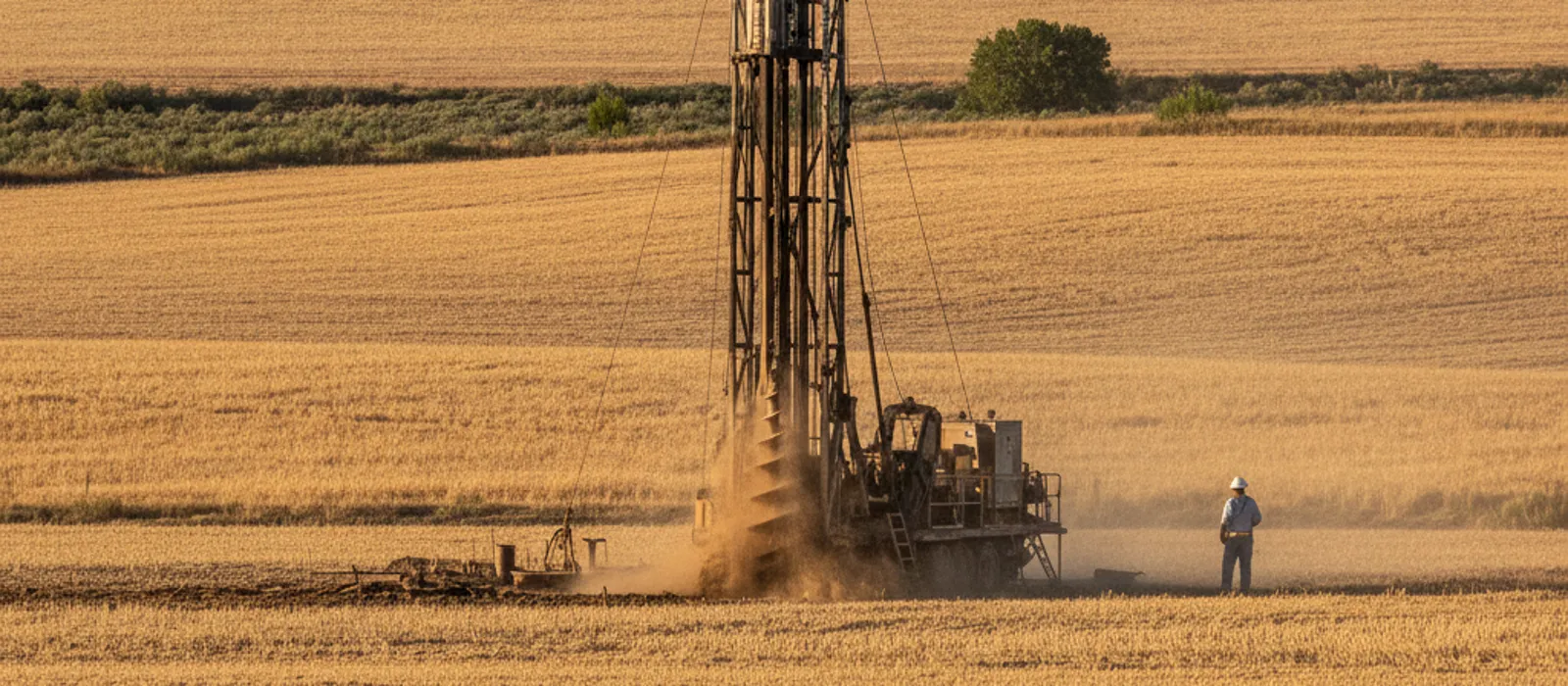
Two neighbors on the same road outside Cashmere. One has a well that hits water at 95 feet. The other had to drill 410 feet to get a reliable supply. Same road, same zip code, a quarter mile apart.
That’s the honest answer when people ask how deep are wells in Washington. It depends, and in the Wenatchee Valley it depends a lot. But “it depends” isn’t useful when you’re budgeting for a new well, buying a rural property, or trying to figure out why your pump is struggling. So let’s put real numbers on it.
In this guide we’ll cover typical well depths across Washington and our corner of it, why depth swings so wildly from one parcel to the next, how to look up your exact well depth for free, and what your depth means for pump choice, repair costs, and the risk of running dry in August.
The Short Answer: Typical Well Depths in Washington State
Across Washington, most residential wells fall between 100 and 500 feet deep. Statewide, the average lands somewhere around 200 to 300 feet, but that average hides huge regional differences.
West of the Cascades, wetter ground and shallow aquifers mean plenty of wells in the 50 to 150 foot range. Out here on the dry side, it’s a different story. North Central Washington wells commonly run 150 to 400 feet, and wells pushing 600 feet or more aren’t rare, especially out on the basalt plateaus around Quincy and Moses Lake.
Here in the Wenatchee Valley specifically, most of the wells we service fall into three rough buckets:
- Shallow valley-floor wells: 60 to 150 feet, usually near the Wenatchee or Columbia rivers
- Mid-depth bench and foothill wells: 150 to 350 feet, the most common range we see
- Deep upland and plateau wells: 350 to 700+ feet
If you don’t know which bucket your well falls into, that’s worth fixing. Depth drives almost every well decision you’ll ever make, from pump sizing to replacement cost. Not sure where to start? Call us at (509) 300-5151 and we’ll help you pull your well’s records and make sense of them. The call and the estimate are both free.
Why Well Depth Varies So Much in the Wenatchee Valley
The short version: geology. The Wenatchee Valley sits where the Cascade foothills meet the Columbia Basin, and the ground under your feet changes fast.
River valley gravels
Near the Columbia and Wenatchee rivers, wells often tap sand and gravel deposits left behind by ice age floods. Water moves easily through this material, so wells can be shallow and still produce well. A lot of older orchard properties in Wenatchee, East Wenatchee, and Monitor sit on wells under 120 feet.
The tradeoff is that shallow gravel wells track the river and the snowpack. In a low-snow year, the water table drops and so does your margin.
Foothill bedrock
Climb out of the valley toward Cashmere, Leavenworth, or the slopes above East Wenatchee, and the drill rig has to punch through granite, sandstone, and other hard rock. Water in bedrock lives in fractures, and fractures are unpredictable. The driller goes down until they hit enough cracks to deliver the flow you need. That might happen at 180 feet. It might happen at 500.
Dale, a customer of ours in Cashmere, learned this the expensive way in 2023. He bought five acres above the valley floor and figured his well would match the neighbor’s 110-footer down the hill. His driller didn’t hit usable water until 285 feet and cased the well to 320. The difference in drilling cost was a little over $9,000. The lesson: never budget off the neighbor’s well log.
Columbia Basin basalt
Head east and south toward Quincy and Moses Lake and you’re on layered basalt, old lava flows stacked like pancakes. Water sits in the rubbly zones between flows. Some of those zones are shallow, but the reliable ones are often deep, which is why 400 to 700 foot residential wells are normal out there.
Basalt aquifers in parts of the Columbia Basin have also been declining for decades from heavy irrigation pumping, which the USGS has documented extensively. A well that was plenty deep in 1990 can be marginal today.
How Deep Are Wells in Washington by Town? Local Numbers
These are typical ranges based on what we see in the field and what shows up in state well logs. Your parcel can absolutely fall outside them.
| Area | Typical depth range | Common ground type | Notes |
|---|---|---|---|
| Wenatchee (valley floor) | 60-180 ft | River sand and gravel | Older wells often shallow, good producers |
| East Wenatchee bench | 120-350 ft | Gravel over basalt | Depth climbs fast as you move up the bench |
| Cashmere | 100-400 ft | Mixed gravel and bedrock | Big swings parcel to parcel |
| Leavenworth | 150-450 ft | Granite bedrock | Fracture wells, flow varies widely |
| Lake Chelan area | 100-400 ft | Glacial deposits and rock | Lakeshore shallower, uplands deeper |
| Quincy | 200-600 ft | Layered basalt | Declining aquifer in some zones |
| Moses Lake | 150-700 ft | Basalt and basin sediments | Deepest residential wells in our area |
Two takeaways from that table. First, “average well depth in Washington” means very little until you narrow it down to your ground. Second, the deeper end of these ranges is becoming more common, not less, as new wells chase water that older shallow wells used to find easily.
What Your Well Depth Means for Your Pump and Your Wallet
Depth isn’t trivia. It decides what equipment you need, what it costs, and what breaks first.
Pump type and depth
Almost every well over 100 feet around here runs a submersible pump that sits down in the water. Shallow wells under about 25 feet of lift can use a jet pump mounted at the surface, but those are getting rare in our area. If you’re weighing options, our breakdown of submersible vs jet pumps walks through where each one makes sense.
Deeper wells need more from the pump. Lifting water 400 feet takes a lot more horsepower than lifting it 100 feet, so deep wells usually run 1 to 2 HP pumps instead of the 1/2 HP units common on valley-floor wells. Getting that match right matters, and it’s the whole point of proper well pump sizing. An undersized pump on a deep well wears itself out fast. An oversized pump on a low-yield well can pump the well dry and burn up.
Depth and repair cost
Here’s the part nobody warns you about when they drill deep: every future service call costs more too. Pulling a pump from 500 feet means more pipe, more wire, more labor, and usually a pump hoist truck instead of two guys and a tripod.
Marisol, near Quincy, has a 540 foot well. When her 12-year-old pump finally quit last summer, the replacement ran about $4,800 all-in: a 1.5 HP submersible, 540 feet of new poly pipe and wire, and most of a day with the hoist truck. Her sister’s 140 foot well in East Wenatchee got a new pump the same year for $2,400. Same brand of pump, half the cost, almost entirely because of depth.
Rough rules of thumb for our area:
- New well drilling: roughly $40 to $65 per foot drilled and cased, so a 300 foot well often lands in the $15,000 to $25,000 range with casing and a basic pump setup. Our guide to well drilling costs in Washington breaks this down line by line.
- Pump replacement: about $2,000 to $3,500 for typical wells under 250 feet, $3,500 to $6,000+ for deep wells.
If your pump is acting up and you’re staring down these numbers, get a real quote before you panic. Our well pump replacement service in Wenatchee includes a free estimate, and we’ll tell you straight if a repair will do instead. You can request your free estimate here.
How to Find Out How Deep Your Well Is
Good news: in Washington, you usually don’t have to guess. Drillers have been required to file well reports with the state for decades.
Check the state well log database
The Washington Department of Ecology keeps well construction reports, and they’re searchable online by address, parcel, or map. Start at Ecology’s well information page and use their well report search. A well log tells you total depth, casing depth, static water level when drilled, yield in gallons per minute, and what the driller punched through on the way down.
Not every old well has a log on file, and rural addresses sometimes make the search clumsy. But it’s free and it works more often than not.
Other ways to pin it down
- Your purchase paperwork. Well logs and yield tests often ride along with rural real estate sales. If you’re currently buying, read our guide on well inspections when buying a home.
- Ask the previous owner or the drilling company. Local drillers keep records going way back.
- Have it measured. When we pull a pump for service, we know exactly how much pipe comes out. We can also sound a well to find the static water level.
One thing not to do: drop a weighted string down the casing yourself. It’s easy to tangle the line around the pump wiring or drop something on top of the pump, and either mistake turns a free question into a paid service call.
When Depth Becomes a Problem: Falling Water Tables and Dry Wells
A well’s depth is fixed the day it’s drilled. The water level inside it isn’t.
Static water levels in parts of Chelan, Douglas, and Grant counties move with snowpack, irrigation season, and long-term aquifer trends. A shallow well with the pump set at 90 feet might have had 40 feet of water above the pump in 1995 and 12 feet today. The well didn’t change. The water did.
Greg, up the Entiat side of the Chelan area, found this out in August two summers ago. His 85 foot well started sucking air every afternoon during irrigation season, spitting and sputtering at the kitchen tap. The well wasn’t dead, the water level was just dipping below his pump intake during peak draw. We lowered his pump 15 feet to the bottom of his usable casing and added a low-water cutoff to protect the motor. Total bill: under $900, and it bought him years. The long-term fix may eventually be deepening the well, but not yet.
Warning signs your water level is flirting with your pump depth:
- Sputtering faucets or air in the lines, especially late summer afternoons
- The pump running longer to fill the pressure tank
- Sediment or cloudy water after heavy use
- Pressure that fades during long sprinkler runs
These same symptoms can also point at a failing pump or a waterlogged pressure tank, so don’t assume the worst. Our post on what to do when a well starts running dry helps you tell the difference. And if you turn the tap and get nothing at all, that’s what our 24/7 emergency well service is for. No water at 9 pm on a Sunday in Leavenworth is exactly the call we built that service around.
One more depth note for new wells: in Washington, most household wells are permit-exempt for the drilling itself, but the driller must be licensed and must file that well report with Ecology. The Department of Health also publishes private well guidance worth a read for any well owner.
If you’ve got questions about your specific well, depth, water level, pump, any of it, reach out for a free estimate or call (509) 300-5151. We’ve pulled pumps from 60 foot wells in downtown Wenatchee and 650 foot wells outside Moses Lake, and we’re happy to talk through yours.
Frequently Asked Questions
How deep is the average well in Washington State?
Most residential wells in Washington run between 100 and 500 feet, with a statewide average around 200 to 300 feet. West of the Cascades, wells are often shallower. In the Wenatchee Valley and the Columbia Basin, 150 to 400 feet is typical, and basalt-country wells near Quincy and Moses Lake can exceed 600 feet.
How can I find out how deep my well is?
Search the Washington Department of Ecology’s online well report database by address or parcel. The well log lists total depth, casing, static water level, and yield. If no log exists, check your property purchase records, ask the original drilling company, or have a well service company measure it during a service visit.
Does a deeper well mean better water?
Often, but not always. Deeper wells are usually better protected from surface contamination like bacteria and nitrates, and they’re less affected by drought. But deep water in this region can carry more minerals, iron, or hardness. Depth helps with reliability and safety, while water quality still comes down to testing.
How much does it cost to drill a well in the Wenatchee area?
Plan on roughly $40 to $65 per foot for drilling and casing, plus $3,000 to $6,000 for the pump system. A typical 300 foot well lands between $15,000 and $25,000 complete. Deeper basalt wells near Quincy or Moses Lake can run well past $30,000, which is why pulling nearby well logs before you drill is worth the homework.