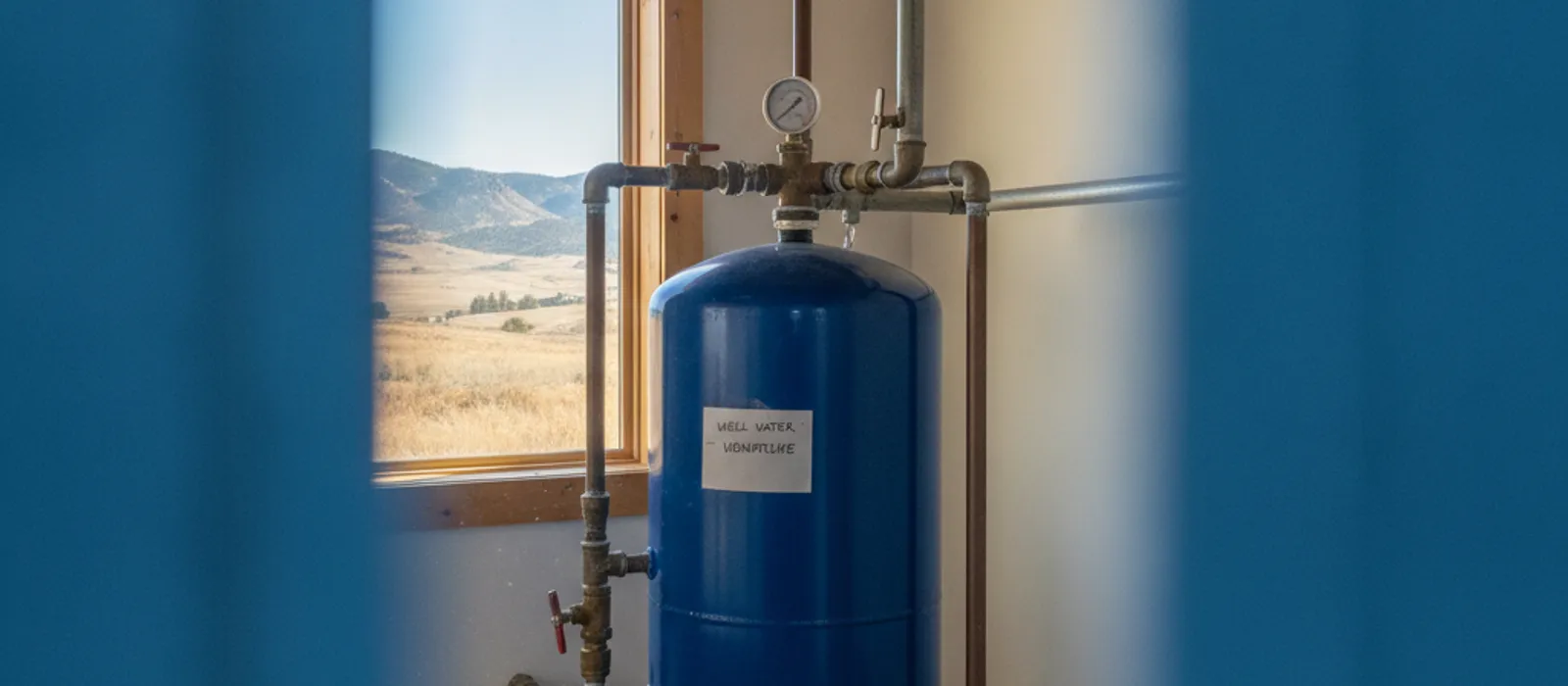
A part that costs about $25 causes more no-water calls in the Wenatchee Valley than any other piece of your well system. Not the pump sitting 300 feet down the casing. Not the pressure tank. The pressure switch, a gray box the size of a deck of cards, usually mounted right next to your tank.
If your water quit, your pressure is bouncing around, or your pump won’t shut off, there’s a good chance you’re looking at well pressure switch problems. That’s actually good news. Of all the things that can go wrong with a well, this is one of the cheapest and fastest to fix. In this guide, we’ll walk through how the switch works, the six failures we see most across Chelan, Douglas, and Grant counties, the safe steps you can take yourself, and what a fix really costs. By the end you’ll know whether you’re dealing with a $25 part or something bigger.
And if you’d rather skip straight to a fix, call us at (509) 300-5151. We answer 24/7 and estimates are free.
How a Well Pressure Switch Works (and Why It Fails)
Your pressure switch is the brain of the whole system. It watches the water pressure in your lines and tells the pump when to run.
Most switches around here are set at 30/50 or 40/60. That means when pressure drops to the low number (30 or 40 psi), the switch snaps closed and powers the pump. When pressure climbs to the high number (50 or 60 psi), it snaps open and shuts the pump off. That click you hear in the pump house? That’s the switch doing its job.
Inside the box there’s a small rubber diaphragm, a spring, and a set of electrical contacts. Each one is a failure point:
- The contacts arc a little every time they open and close. Over years, they pit, burn, and weld.
- The diaphragm hardens and cracks, especially with our hot summers and cold winters swinging the pump house from 100 degrees to below freezing.
- The sensing tube, the little nipple the switch mounts on, clogs with iron, sediment, and scale. With the mineral-heavy groundwater common in orchard country, this is the number one killer of switches in our area.
A pressure switch cycles thousands of times a year on a typical rural property. Most last 5 to 10 years. If yours is older than that and acting up, replacement usually beats repair.
6 Common Well Pressure Switch Problems and Their Symptoms
Here’s what failure actually looks like, ranked by how often we see each one on service calls.
1. Pump won’t turn on at all
You open a faucet, pressure falls past the cut-in point, and nothing happens. No click, no hum. Often this is burned contacts that can no longer pass current, or a clogged sensing tube that keeps the switch from feeling the pressure drop. Before you blame the switch, check the breaker. A tripped breaker mimics a dead switch perfectly, and if it keeps tripping, that’s a different conversation. We covered that in our post on a well pump that’s tripping the breaker.
2. Pump won’t shut off
The opposite problem, and the more dangerous one for your wallet. Contacts weld themselves closed, or the tube clogs so the switch never feels pressure rise. The pump runs and runs. A submersible pump running nonstop against a dead-headed system can burn itself out in days, and that turns a $25 problem into a $2,500 one.
3. Rapid clicking (short cycling)
The switch clicks on and off every few seconds while water runs. Sometimes the switch itself is the culprit, but more often it’s a waterlogged pressure tank that’s lost its air charge. The switch is just reporting the chaos. Either way, don’t ignore it. Short cycling is the fastest way to kill both the switch and the pump motor.
4. Chattering or buzzing at the switch
A fluttering, sizzling, or chattering sound means the contacts are bouncing instead of snapping cleanly. Each bounce throws an arc. You’ll often see scorch marks if you look at the contacts (power off first, always). This switch is on borrowed time.
5. Pressure that drifts or surges
Water blasts out, fades to a trickle, then surges back. The switch may be cutting in late because the spring has weakened or the tube is partially clogged. It can also point to other causes, which we break down in our guide to low water pressure on a well system.
6. Visible scorching, corrosion, or ants
Yes, ants. They crawl into switch housings, get zapped across the contacts, and jam them. We pull at least a dozen ant-packed switches out of pump houses around Quincy and Moses Lake every summer. Corrosion from a damp pump house does the same thing more slowly.
Dale in Cashmere heard the clicking for two weeks and figured it would sort itself out. By the time he called us, the short cycling had cooked his pump motor’s start capacitor too. His bill went from what would have been a $250 switch-and-service call to $680. The clicking is never going to sort itself out. If you’re hearing it now, request a free estimate before it takes the pump with it.
Troubleshooting Well Pressure Switch Problems Safely
You can diagnose a lot from outside the switch without touching a wire. Here’s the order we’d follow.
Step 1: Check the breaker
Go to your panel and find the well pump breaker, usually a 2-pole 20 or 30 amp. If it’s tripped, flip it fully off, then back on. If it trips again, stop. Repeated trips mean a motor or wiring fault, and that’s not a homeowner job.
Step 2: Look at the pressure gauge
There’s a gauge near the switch on most systems. Run a faucet and watch it.
- Gauge drops below cut-in and the pump never starts: likely switch or clogged tube.
- Gauge swings fast between cut-in and cut-out: likely a waterlogged tank.
- Gauge reads zero and stays there: the gauge itself may be dead, or you’ve got a bigger supply problem. Our post on losing water suddenly walks through that scenario.
Step 3: Listen for the click
Have someone run water while you stand at the tank. You should hear one clean click when the pump starts and one when it stops. No click at the right pressure, or machine-gun clicking, points at the switch or tank.
Step 4: Tap the switch (the old-timer trick)
With the cover on, give the side of the switch housing a firm tap with a screwdriver handle. If the pump suddenly kicks on, the contacts are sticking. That’s a diagnosis, not a fix. A switch that needs percussion to work needs replacement this week, not someday.
Step 5: Kill the power before anything else
If you want to pull the cover and look for scorched contacts or ant debris, shut off the breaker first and verify the gauge and your faucets confirm the pump isn’t running. The switch carries 240 volts. People get hurt on these every year. Anything past looking, like testing voltage, swapping the switch, or adjusting the spring nuts, is where we’d tell our own family to put the screwdriver down and call a pro. The EPA’s private well owner resources say the same thing about leaving electrical work to licensed techs, and we’ll co-sign that all day.
Marcie out in Quincy followed steps 1 through 4 from her phone while talking to our dispatcher on a Saturday morning. She found the gauge stuck at 12 psi with no click. Because she’d already narrowed it down, our tech arrived with the right switch on the truck and had her water back in 40 minutes. Total bill: $240. Good troubleshooting on your end makes our visit faster and cheaper.
What Pressure Switch Repair Costs in the Wenatchee Valley
Here’s what you’re realistically looking at, based on what we charge and what we see across North Central Washington.
| Repair | Parts | Typical Total (Installed) | Time |
|---|---|---|---|
| Pressure switch replacement | $20 to $50 | $150 to $350 | Under 1 hour |
| Switch + clogged sensing tube cleanout | $30 to $60 | $200 to $400 | About 1 hour |
| Switch + pressure gauge replacement | $35 to $75 | $200 to $375 | About 1 hour |
| Switch + pressure tank replacement | $300 to $700 | $800 to $1,800 | 2 to 4 hours |
| Emergency after-hours call | varies | add $100 to $200 | same day |
A few notes on those numbers. If your tank is waterlogged, replacing just the switch is throwing money away, because the short cycling will eat the new switch in a year. Our pressure tank replacement service page covers what that job involves. And if the pump itself got damaged by a stuck switch, you’re into different territory, which our well pump repair team in Wenatchee can assess on site before anyone commits to anything.
Compare any of this to a full pump replacement at $2,000 to $5,000 and the lesson is simple. Fix switch problems early. They’re the cheap warning light of the well world.
When It’s Not the Switch
About a third of the “bad switch” calls we run turn out to be something else. Here’s what masquerades as well pressure switch problems:
- Waterlogged pressure tank. The most common impostor. The tank loses its air cushion, pressure swings wildly, and the switch chatters trying to keep up.
- Failing well pump. A worn pump builds pressure slowly or not at all, so the switch stays closed and the pump “runs constantly.” The switch is fine. The pump isn’t.
- Leak between the well and house. A buried line leak bleeds pressure, forcing constant cycling. Look for soggy spots or unusually green grass between the wellhead and the house, even in August.
- Dropping water table. In dry years, some wells around here pull down hard by late summer. If your problems show up only during irrigation season, the aquifer may be the story, not the switch. The Washington Department of Ecology tracks groundwater conditions statewide, and their well construction and licensing resources are worth a bookmark for any well owner.
Tom, up the Entiat Valley north of Wenatchee, replaced his pressure switch twice in one winter before calling us. Both switches were fine. His pump house had a gap under the door, the sensing tube was freezing solid overnight, and each “dead” switch thawed and worked perfectly by the time he tested it at noon. We sealed and insulated the pump house for $180 and the problem never came back. If your switch only fails on cold mornings, read our piece on frozen well pipes before you buy another part.
Not sure which problem you’ve got? That’s exactly what a diagnostic visit is for. Schedule a free estimate and we’ll test the switch, tank, and pump in one trip.
Keeping Your Pressure Switch Alive in North Central Washington
Our climate is hard on these little boxes. A few habits stretch their life:
- Insulate the pump house before November. Freezing is the top cause of winter switch failures from Leavenworth to Lake Chelan. Heat tape on the sensing tube costs almost nothing.
- Check your tank’s air charge yearly. With the pump off and system drained, the tank’s air valve should read 2 psi below your cut-in setting. A healthy tank means a slow, easy life for the switch.
- Listen once a month. Run a faucet, stand by the tank, count the seconds between pump cycles. Under 60 seconds of run time on a standard tank is a red flag.
- Deal with iron and sediment. If your water stains fixtures orange, that same iron is plating the inside of your sensing tube. Treatment protects the whole system, not just your laundry.
- Replace on age, not just failure. A $30 switch swapped proactively at year eight beats a midnight no-water emergency in January.
If the worst happens anyway, water gone at 11 pm with house guests arriving tomorrow, that’s what our 24/7 emergency well service exists for. One call, (509) 300-5151, any hour.
Frequently Asked Questions
How do I know if my well pressure switch is bad?
The classic signs are no click when pressure drops, rapid clicking while water runs, a pump that won’t shut off, or visible scorching on the contacts. The tap test helps too. If tapping the switch housing makes the pump kick on, the contacts are sticking and the switch needs replacement.
Can I replace a well pressure switch myself?
Mechanically it’s a simple part, but it carries 240 volts and sits on a pressurized line, so a mistake can hurt you or flood the pump house. If you’re not comfortable killing power, verifying it’s dead, and matching the switch rating exactly, hire it out. At $150 to $350 installed, it’s one of the cheapest pro repairs in the well world.
Why does my pressure switch keep clicking on and off?
Rapid clicking, called short cycling, usually means your pressure tank has lost its air charge and the switch is reacting to wild pressure swings. Sometimes the switch’s sensing tube is clogged with iron or sediment instead. Either way, stop running water and get it checked, because short cycling destroys pump motors fast.
How long does a well pressure switch last?
Most last 5 to 10 years, though hard water, an undersized or failing tank, and freeze-thaw swings in an uninsulated pump house can cut that in half. If your switch is past eight years old and showing any symptoms, replace it rather than nursing it along. The part costs less than a tank of gas.